TL;DR Summary
Building without validation is financial suicide. Discover the exact SaaS customer discovery frameworks and questions I use to isolate urgent pain points, validate willingness to pay, and build software that scales sustainable MRR.
I constantly see founders burn through their runway building software nobody actually asked for. Building a product without validating the core problem is financial suicide.
If you want sustainable growth, you cannot rely on gut feelings. You need a rigorous system to test whether your idea solves a painful, profitable problem.
That system starts here.
What is SaaS customer discovery?
SaaS customer discovery is the systematic process of interviewing target users to validate a software idea before writing any code. It focuses on identifying urgent pain points, verifying actual market demand, and confirming a high willingness to pay, ensuring your product scales with sustainable MRR.
Why SaaS Customer Discovery Dictates Unit Economics
Founders often skip validation because they are eager to build. I consider this the fastest way to ruin your unit economics.
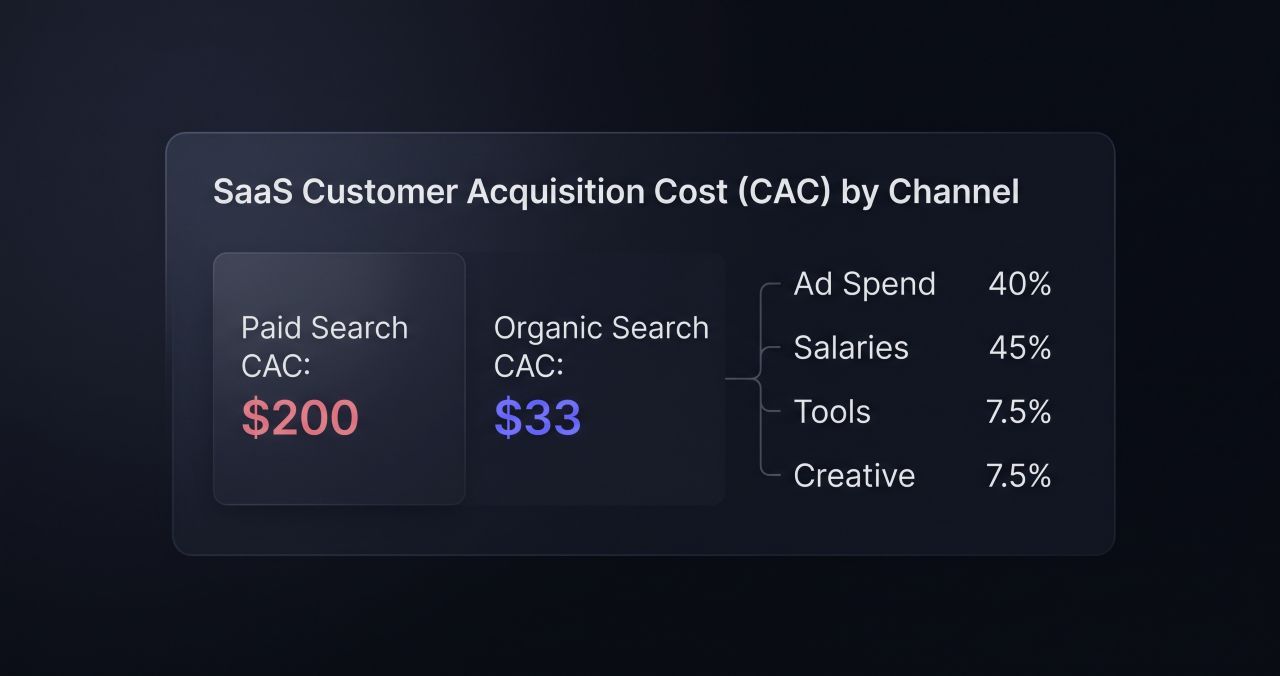
If you do not understand the exact pain your target market experiences, your Customer Acquisition Cost (CAC) will skyrocket. You will spend months trying to market a solution that requires too much education.
According to data from CB Insights, 42% of startups fail simply because there is no market need for their product. Customer discovery eliminates this risk.
By executing targeted interviews, I learn:
- The reality of the problem: Does it actually exist outside of my head?
- The urgency: How painful is this workflow right now?
- The commercial viability: Are they actively paying for a workaround?
My Framework for SaaS Customer Discovery Questions
Not all questions yield actionable data. I structure my discovery process to extract truth, not compliments.
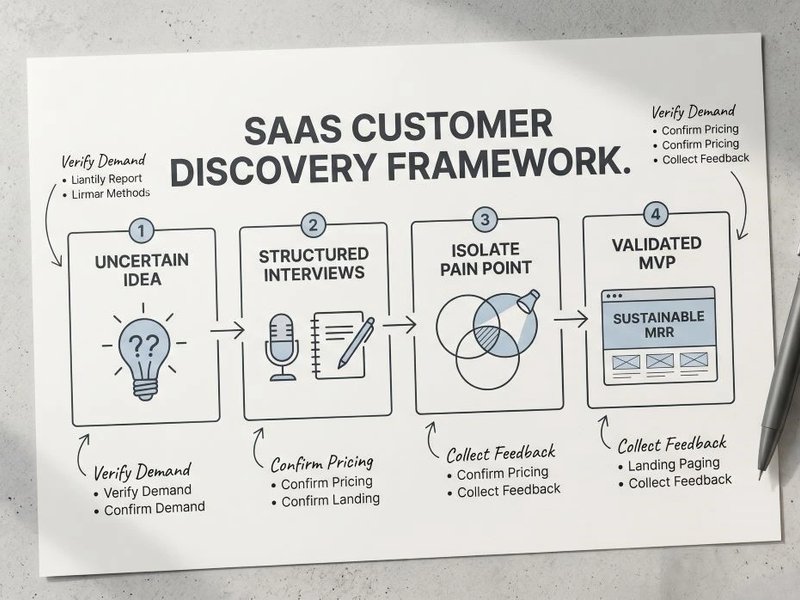
Step 1: Isolate the Core Problem
I never start by pitching my solution. If the problem isn’t pressing enough, the solution is irrelevant.
To uncover the raw truth about their workflow, I ask:
- What is the single biggest bottleneck in your current [specific process]?
- Can you walk me through exactly how you handle this problem today?
- What is the most frustrating part about your current tool stack?
If they are not actively trying to solve the problem with spreadsheets or clunky workarounds, the pain is not severe enough to build a SaaS around.
Step 2: Validate Willingness to Pay
A great product means nothing if users will not open their wallets. Validating willingness to pay is non-negotiable for SaaS customer discovery.
I use these questions to gauge commercial intent:
- How much time or money does this problem cost your business every month?
- What tools are you currently paying for to manage this?
- If a tool could completely eliminate this bottleneck, how would you evaluate its ROI?
This uncovers the perceived value of the solution. It also gives me the baseline data I need to structure a profitable pricing model.
Step 3: Test Assumptions with an MVP
Once I have qualitative data, I move to quantitative validation. I build the leanest Minimum Viable Product (MVP) possible.
I do not build a fully-featured app. I build a landing page, a wireframe, or a simplified workflow.
Once the user interacts with the MVP, I ask:
Growth mechanics, zero fluff.
Join SaaS founders and operators getting weekly notes and tear-downs on organic acquisition and churn reduction.
- At what point in this workflow did you experience value?
- What specific feature is missing that prevents you from using this daily?
- Would you pay for access to this tool right now?
Common Pitfalls in SaaS Customer Discovery
Even experienced growth marketers make mistakes during discovery. Here are the traps I actively avoid:
- Asking leading questions: Asking “Would you use this feature?” guarantees a false positive. I ask about past behavior instead of future promises.
- Talking to the wrong segment: I strictly interview my ideal customer profile (ICP). Feedback from users outside my target market dilutes the data.
- Ignoring negative signals: Apathy is a massive red flag. If the user is not excited about solving the problem, I pivot immediately.
FAQs
How many interviews do I need for effective SaaS customer discovery?
I recommend conducting at least 15 to 20 structured interviews. By the 15th conversation, you should start hearing the same pain points and objections repeatedly, which signals that you have identified a clear market pattern.
What is the difference between SaaS customer discovery and user testing?
Customer discovery happens before the product exists to validate the problem and market demand. User testing happens after a prototype or product is built to evaluate usability, design, and feature functionality.
Should I charge users during the SaaS customer discovery phase?
Yes, whenever possible. The ultimate validation is a credit card transaction. Securing pre-sales or paid beta signups proves that the problem is urgent and the customer is genuinely committed to your proposed solution.